Asana vs Timelint.
Asana is flexible and task-first. Many agencies feel that flexibility as drift: every project becomes its own system, status means different things, and support leaks into email + Slack. Timelint is ticket-first with guardrails—built for fast-paced agency delivery and support retainers.
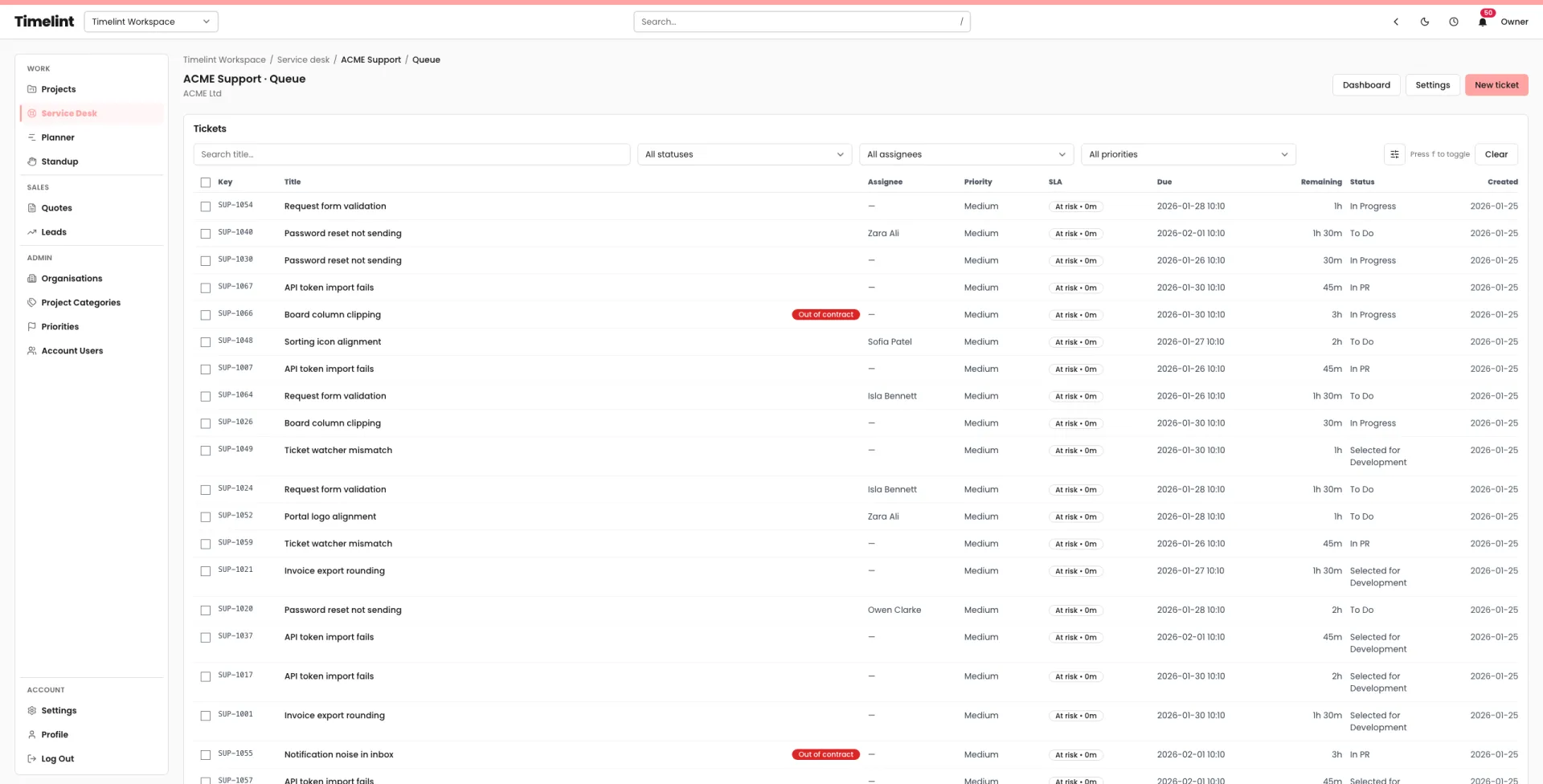
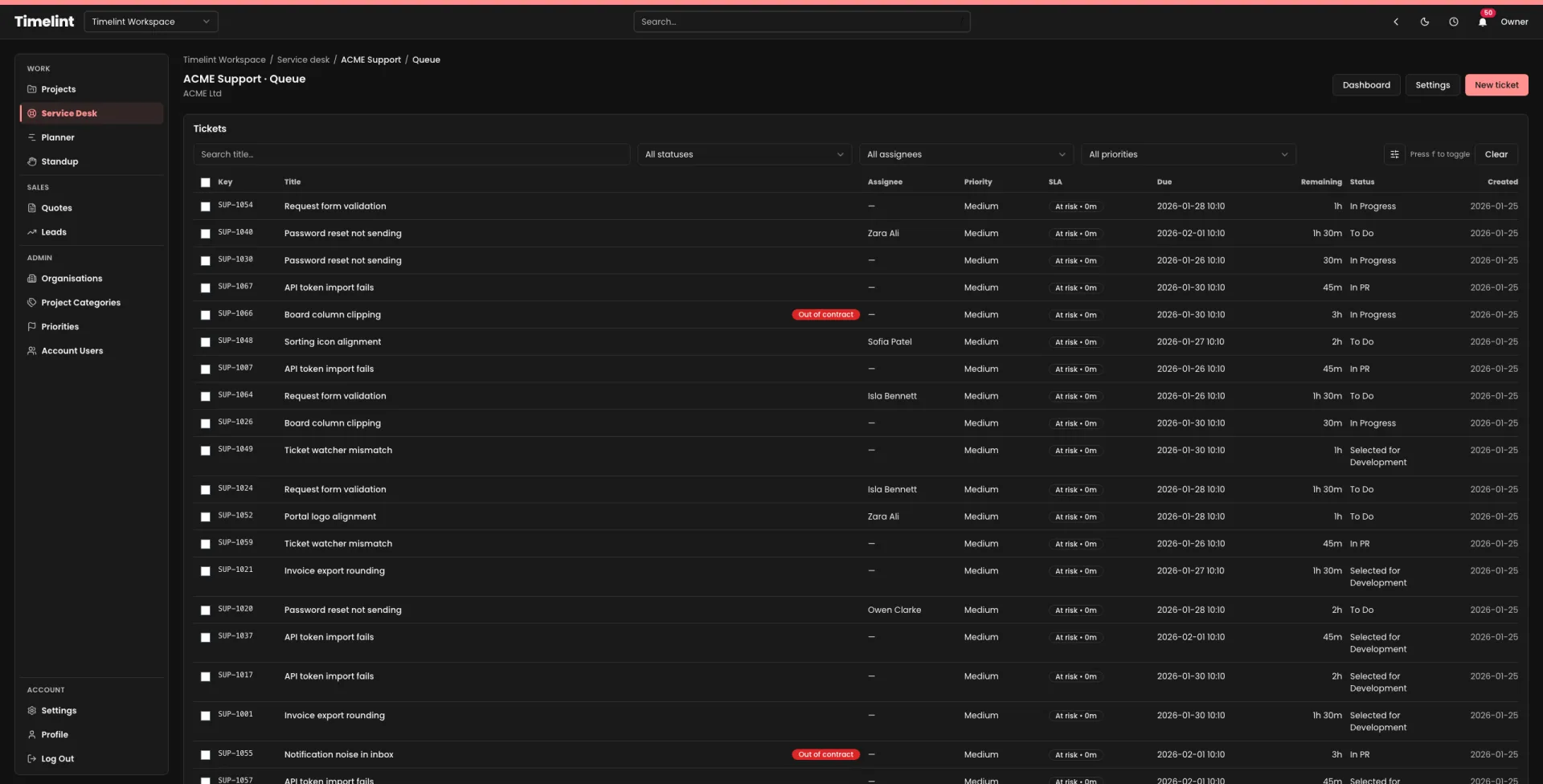
- Ticket-first workflow (issue keys, boards, statuses).
- Workflow templates so projects stay consistent.
- Client portal designed for ticket requests + updates.
- Service desk inside projects (queue + SLA + ownership).
- Retainer hours + time tracking tied to tickets.
Flexibility vs coherence
Agencies need a system the team can keep up to date under pressure. Coherence beats endless configuration.
- – Flexible structure—easy to drift into “every project is different”.
- – Status and ownership can become inconsistent across clients.
- – Client intake often becomes email + Slack side channels.
- – Support + retainer boundaries require extra discipline and tooling.
- ✓ Opinionated, ticket-first workflow built for agencies.
- ✓ Workflow templates that help projects keep the same shape.
- ✓ Service desk inside projects with queue + triage + SLA.
- ✓ Client portal with predictable access and one thread per ticket.
- ✓ Contract hours + out-of-contract flags tied to tickets.
Guardrails that keep agencies moving
You don’t need strict process. You need defaults that stop drift and keep decisions visible.
Flexibility is great until you’re onboarding, triaging support, and trying to keep a consistent client experience across many projects.
- Every client project evolves its own conventions.
- “Done” means different things in different places.
- Support intake becomes a parallel universe.
- Retainer boundaries get awkward when they aren’t explicit.
Timelint is designed around the agency mental model: tickets, clear ownership, clear status, and support that stays attached to delivery.
-
1Workflow templates
Start projects with sensible defaults so new work looks like existing work. Less “set it up again”.
-
2Service desk inside projects
Intake → triage → delivery in one workflow, so support doesn’t drift into side channels.
-
3Time tracking with required notes
Keep logs auditable and useful. Fewer debates later.
-
4Retainer boundaries built in
Track contract hours and mark out-of-contract work explicitly, tied to tickets and work logs.
Agency ops, without the side channels
Reduce the status tax: keep requests, updates, time, and ownership on the same unit of work.
Requests in, status out, with one thread per ticket and predictable per-contact access.
Queue + triage, first response SLA, and ownership inside the delivery workflow.
Standardise statuses across projects without spending your life in configuration.
Track remaining hours and handle out-of-contract work without awkward surprises.
Timer or manual logs. Notes required so time stays auditable.
Fast navigation and clear status that stays readable.
Plan on tickets, not duplicated tasks and spreadsheets.
FAQ
Answers to common questions. Keyboard-friendly and accessible by default.
Is Timelint an Asana replacement for agencies? +
Is Timelint less flexible than Asana? +
Can clients submit requests and see status? +
Do you support SLAs and triage? +
What about retainer hours? +
Pick the workflow your team will actually keep up to date
Ticket-first project management for agencies.